Showing posts with label spotlight: Portugal. Show all posts

Saturday, May 24, 2014

Spotlight: Portuguese Olive Oil

oil1W
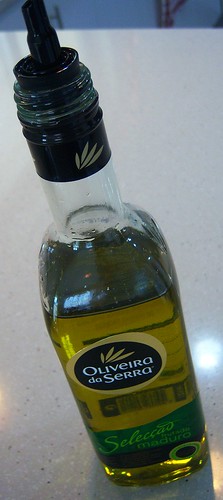
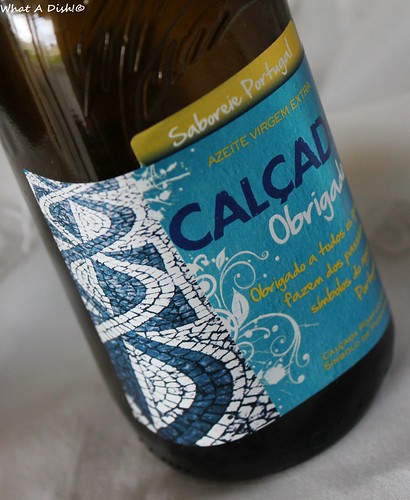
Before living here in the Azores, I'd never really thought of Portuguese olive oil much.  I spent many of my growing-up years in Andalucia, Spain, where, if we were taking a trip to or past Sevilla, you could smell the intense fruitness of the olive oil factories from miles away, and I loved it.  Olive oil was everywhere, and it was part of the way of life.  So of course, we always used prized Spanish olive oil there.  
oilW
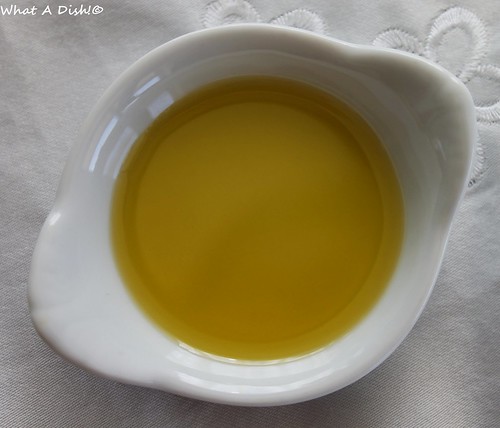
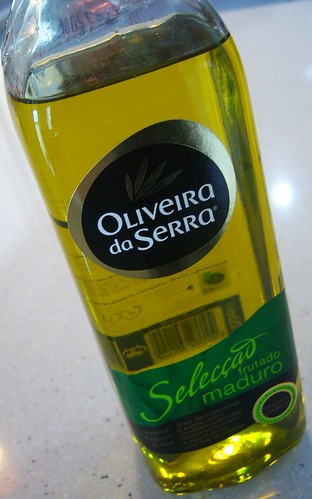
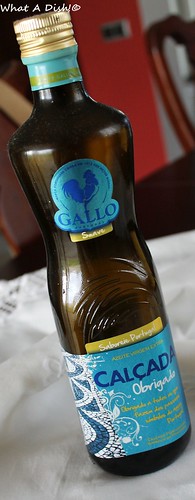
Upon moving here, I was delighted to see the expansive aisle of olive oil in the grocery store here.  For such a small place, there is a great selection of olive oil.  I don't have a pic of the olive oil aisle, because I've heard that stores get mad if you take pics here.  I only have pics of two of the many, many, many bottles of Portuguese olive oil I've gone through in my 6 years of living here.  I'd always try to get a different kind of olive oil each time I bought it; within brands, there are tons of different kinds, even, and it was fun trying so many.  (I wish I had pics of more of the bottles; some are so pretty!  If, going through all my old pics, I find more photos of olive oil bottles, I will add them here.)
oil3
I know the Italian olive oil is something to look forward to, and I am, but I've really enjoyed getting acquainted with your olive oils, Portugal.  :)  Gallo's Website (One of the biggest Portuguese brands.)  This olive oil all comes from mainland Portugal, as far as I know; not sure if any of the Azores islands produce their own olive oil.  PS:  If you're looking for ways to use olive oil, just search "olive oil" in my search bar up there on the left.
oil2W
oil2
**This post and photos are property of http://dishingwithdish.blogspot.com/ **

Saturday, May 17, 2014

Spotlight: Bolo Levedos

boloW
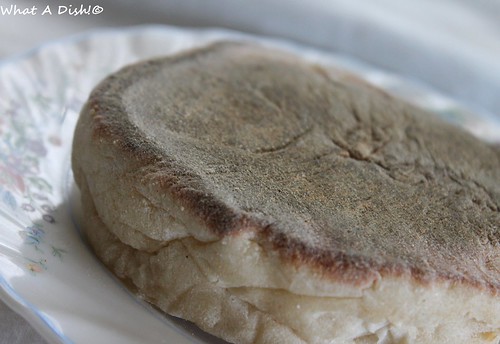
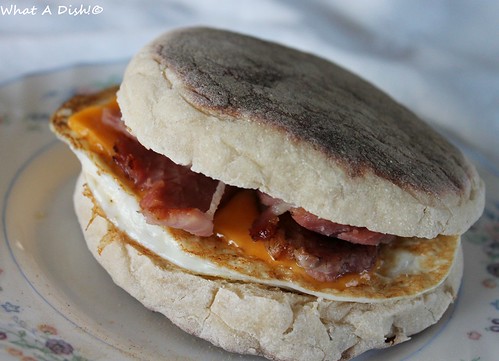
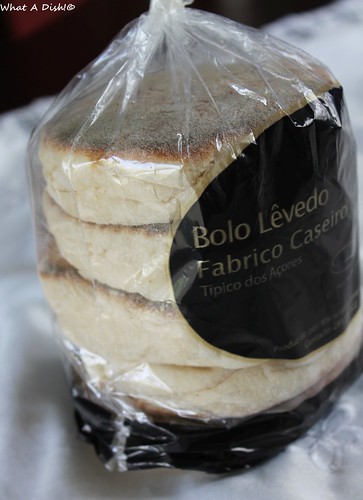
I wanted to talk about a few more local food items before we moved.  My family LOVES these bolo levedos; we call them Portuguese English Muffins, lol.  They are so good- like American English muffins but better- better flavor, and larger.  Usually we just split them, toast them and eat them with butter, but after Easter, we made delicious egg-ham-cheese breakfast sandwiches with them, pictured above.  (Split, toast, butter, optional, add fried egg, cheddar cheese, and ham warmed up on the a pan or griddle.)  This is one of my kids' favorite foods here.  I will really, really miss these.  Although, there are recipes online for these, and I just bought this cookbook, and it contains the recipe for these.  
bolo2W

bolo5W

bolo3W

bolo1W
**This post and photos are property of http://dishingwithdish.blogspot.com/ **

Saturday, August 20, 2011

Spotlight: Alcatra

The day after I came home from the hospital with my new baby, our landlord's father brought over a huge terra-cotta dish of Alcatra.  Alcatra is a very popular, local beef dish- a huge chunk/slab of beef is cooked for a very long period of time (I've heard a few days, sometimes!) with large amounts of red wine, garlic, peppercorns, and other spices.  It's on every restaurant menu here and is eaten frequently, at people's homes and at festivals, etc.  He brought it over at 10am and it was warm.  He told us to just cook it on low on the stove-top until dinnertime.  So we put a lid on it and did just that.  I've read online that it can also be baked in the oven for a very long time. 

He gave us a loaf of bread, too.  I've had Alcatra in restaurants here a few times, and sometimes, it is served with plain, boiled potatoes.  Once, we had a fish alcatra (it might have been eel... we're still unsure about that, lol) and they gave us bread.  They showed us how to do it- put chunks of bread on your plate, and top it with the meat and juices from the terra-cotta cookware.  So, this is what we did with the Alcatra from our landlord's parents.  (First picture above shows the meat over the bread.  Below is just the bread). 
I have never made Alcatra myself, but I found a few recipes online if you are interested.  Here is one, and here is another.  If you want to Google recipes yourself, look up "Portuguese Alcatra"; otherwise, your search might only yield info about "Alcatraz".  :)  Maybe you should throw "Azores" into your search as well, because according to Wiki, the word Alcatra means something else in mainland Portugal. 

We had way more Alcatra on hand than we could eat in a reasonable amount of time, so we froze two large portions of it for later.  I'm thinking Alcatra beef stew this fall!  :)

I just love our landlord and his parents- a few days after the Alcatra, he brought over a HUGE, still-warm loaf of sweet, delicious, flaky, buttery Massa Sovada- my FAVE Portuguese bread- it is soooo good!  This one had hints of cinnamon and even cardamom.  Their neighbor makes it in her house- using an old-fashioned wood burning oven (they look like this from the outside- all of the older houses here (and some new ones) have the huge, tell-tale chimeny).  We ate the bread too fast to get pictures this time around.  ;)
Alcatra in its terra-cotta cooking vessel.
**This post and photos are property of http://dishingwithdish.blogspot.com/**/

Wednesday, August 18, 2010

Spotlight: Massa Sovada

Massa Sovada is Portuguese Sweet bread.  It includes yeast, sugar, butter, flour, milk, etc.  It is a very rich yeast bread.  I've mentinoned it a few times; here, when I made it myself, and here, when I mentioned it makes wonderful french toast.  One can find it everywhere here- in every bakery, pastry shop, grocery store, some restaurants, and in many homes.  Massa Sovada was traditionally made as a holiday food, but is now available all year, according to Wikipedia.  I want to try making my own again, but this time, shaping it into rolls instead of the big loaves.
msW
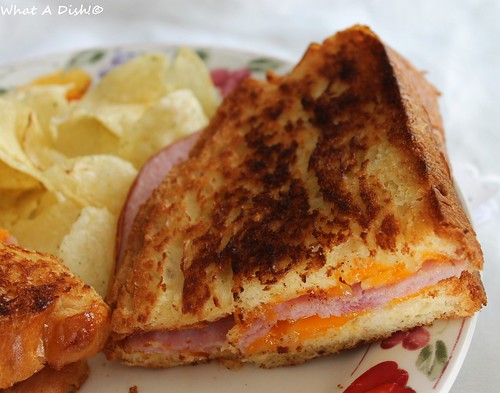
Grilled Ham & Cheese on Massa Sovada; May 2014
The loaf in the first pic above was very kindly dropped off by our landlord's father.  It was just huge- like twice as big as my head!  ;)  (And I have a big head!)  I'm not sure if it was homemade or bakery-bought; as my husband is the one who answered the door, and he didn't think to ask.  This was some of the best massa I've EVER had!!  I've tried it from many different bakeries, and made it myself, and this was by far the best.  It had an almost flakey texture, like brioche, and was fluffy and sweet.  We made toast out of it the next morning and my fam polished off about 3/4 of this huge loaf!  Next time we see my landlord, we're going to have to ask where this loaf came from, so hopefully we can have it again! 

It was very good toasted, with butter, and my homemade strawberry jam.  (Below).  It was also very delicious, toasted, with butter, (again!) and topped with a thin slice of sharp cheddar and a slice of thin deli turkey.  (Last photo).  I had both in the same sitting.  :)

**This post and photos are property of http://dishingwithdish.blogspot.com/ **
Thursday, November 12, 2009

Spotlight - São Jorge Cheese

There are so many foods available here that I either use regularly or have tried out and loved. I want to take some time every once in a while and "spotlight" one; tell a little more about it and what recipes it can be used for.

I'll start off with Queijo São Jorge, from the (kind-of-nearby) island of São Jorge. This cheese is famous here. Here is some info. Depending on the length of time it has been cured, the firmness varies, but we usually get it when it's quite firm, almost like a block of parmesan. The flavor is spicy and sharp. We had it out as an appetizer last year at our Thanksgiving table. We've put it on pizza, and we've had it in these cheese rolls. (Quite fitting, since the Azores are volcanic islands). It is my 5-year old's favorite kind of cheese, hands down. His classroom is peanut and nut free, so every time he takes a lunch from home, he has a São Jorge Cheese Sandwich. He likes it on a soft little roll, with butter. At the little cafes around here, a popular item is a few slices of Sao Jorge on a buttered mini baguette, for around $1.50.

The cheese of the Azores is said to be better than other cheeses, since the well-cared for cows are often able to graze on sea-side green pasture. Cows get the prime real estate here. (I went through all my pics, looking for a pic of sea-side cows, but wierdly enough, couldn't find any. I did find a pic of cows on a hill, with a beautiful view. I already blogged about that, here.) Also, the cows are not kept in feed lots, but allowed to graze on rich, green, sweet grass. To milk them, the farmers bring in portable milking machines, right to the fields. When all of the grass in a certain pasture is eaten, the cows are moved to another pasture, and they often move them using the main roadways. It's common to be driving and get stuck behind a "cow parade" here.

Interestingly enough, São Jorge cheese is too strong for my husband- he's not a lover of strong cheeses like I am. :)

In the future, I'll include more recipes using this delicious cheese.  I found a kind of "copy-cat" cheese in the US, called St. George cheese, made by an Azorean couple living in the US.  St. George Cheese

**This post and photos are property of http://dishingwithdish.blogspot.com **